AI Receptionist: How It Works for UK Small Businesses
Informational and commercial: understand capabilities, limitations and how to choose an operationally connected call-handling system.
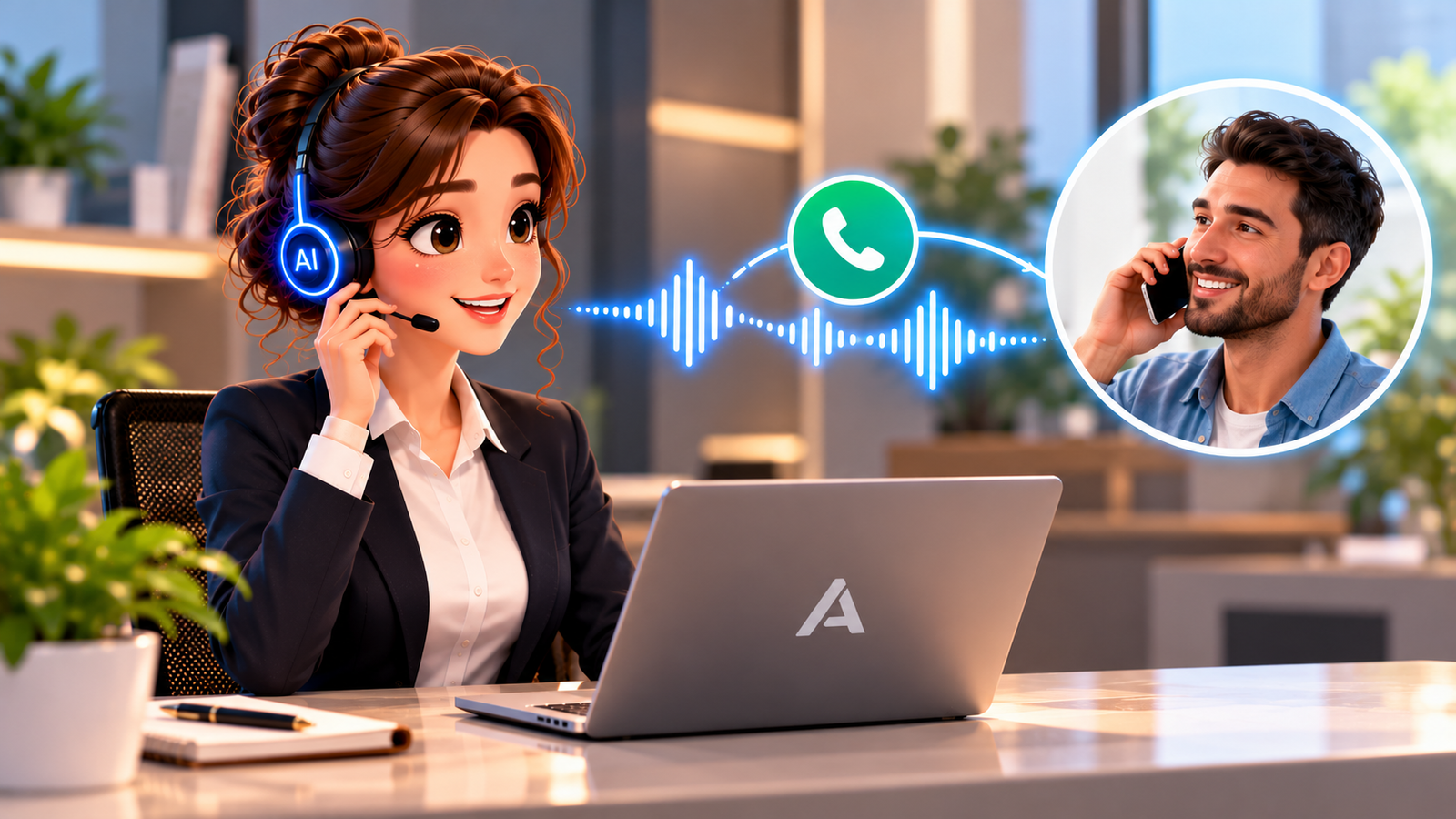
A customer rings while the team is busy, the office is closed or a receptionist is dealing with someone in person. A missed or poorly handled call may create extra follow-up work and leave a serious enquiry without a clear owner. The right ai receptionist approach starts by understanding what callers need and what the business can safely promise, not by purchasing a voice demo.
For UK service businesses, the central question is whether a spoken interaction can lead to a reliable next step: useful answers, correct contact records, a genuinely confirmed appointment or a timely handover to a person. This guide examines practical workflows, operational limits, UK privacy considerations and what to check before implementation. It avoids invented conversion statistics, unverified A1 Legacy prices and guarantees that every call becomes a sale.
What is an AI receptionist and which calls can it handle?
An AI receptionist is a configured voice system that can answer an incoming business call, interpret a caller’s request and take an approved next action. That might mean recording a new enquiry, reading opening hours, checking supported appointment availability or transferring the caller to a team member. It is not simply a pre-recorded greeting and it should not be presented as a substitute for professional judgement.
When people ask what is an ai receptionist, the most useful answer concerns the outcome after the conversation. An assistant that sounds natural but forgets the customer’s details creates another admin task. A properly connected system captures structured information, applies the business’s approved rules and puts an actionable record in the CRM.
Consider an electrician on a site visit. One caller needs a future inspection, another reports a possible immediate safety issue and a supplier wants to confirm a delivery time. The system may gather the first enquiry and propose a callback. The safety concern needs the firm’s prescribed urgent pathway, not a speculative diagnosis or reassurance from software.
Common supported tasks include simple business FAQs, caller identity and contact capture, service-area questions, enquiry classification, calendar enquiries, message taking and controlled routing. Every capability depends on the actual deployment, data access and permissions; none should be assumed merely because a vendor advertises conversational AI.
How does an AI receptionist work from call to CRM?
The answer to how does an ai receptionist work is a sequence of controlled steps rather than one clever conversation. A caller dials an existing number or an assigned line; telephony rules direct eligible calls to a voice layer. The assistant recognises spoken requests, checks a constrained set of information and determines whether to answer, gather data, offer a booking or hand off.
A practical flow is: customer call → voice AI → approved workflow and integration layer → CRM → a human team member, verified appointment or operational queue. For a new quotation request, the voice layer might collect name, service needed, location and a suitable contact method; the workflow validates mandatory fields before creating or updating a CRM opportunity.
The system should not promise that a booking exists merely because it asked for a preferred time. It needs a successful calendar confirmation, appropriate access permissions and a failure pathway for unavailable slots. Similarly, a telephone number heard during a call should be confirmed or validated before staff rely on it.
Good design also includes silence, interruptions, poor audio, ambiguous names and callers who immediately ask for a person. Retries should be bounded. A failed integration ought to create an exception and route the captured details to a responsible employee, rather than giving the caller a false confirmation.
AI receptionist for small business: where it adds value
An ai receptionist for small business is especially relevant when staff cannot consistently answer the telephone while serving customers, travelling or working outside normal reception hours. The operational problem is fragmented attention: a missed lead sits in call history, a voicemail needs transcription and somebody must later reconnect the information with a calendar and customer record.
For a plumbing firm, structured questions can distinguish a routine quotation request from a potentially urgent report and route according to approved procedures. For a fitness studio, the assistant may explain staffed hours and offer a supported trial-session slot. For a lettings business, it could collect a viewing request and availability preferences, without independently deciding eligibility or legal matters.
A smaller company should begin with one number and a short list of reliable actions, not with a promise of fully autonomous operations. Track incomplete records, wrong transfers, unanswered caller questions and customer requests for a human. Expanding after those measures improve is safer than launching every workflow at once.
The aim is not replacing relationships. Let AI carry the repetitive intake work while people retain authority for complaints, negotiation, financial commitments, complex quotations and situations where circumstances matter more than a script.
What should an AI receptionist UK buyer check?
An ai receptionist uk deployment should reflect local calling expectations, time zones, accents, privacy obligations and the organisation’s actual business processes. Ask whether the assistant handles noisy calls, misunderstood addresses, calls from withheld numbers and callers requesting a live representative. Ask for a demonstration using your real enquiry types.
For UK data protection, document what personal information is captured, why it is needed, how callers receive appropriate privacy information, who can access records and how long recordings or transcripts are retained. If call recordings are used, determine the lawful basis and give suitable notice. Contracts with processors, security controls and any international transfers need assessment.
Inbound customer-service handling is not the same as an automated marketing campaign. For SMS, email or outbound marketing, check UK GDPR and PECR requirements, including the relevant consent or other applicable rules, suppression and opt-outs. The ICO telephone marketing guidance explains that automated marketing calls can be subject to stricter rules than live calls.
Health, legal and financial services should limit voice agents to administrative activities unless qualified professionals have designed and authorised another lawful process. An assistant should not offer clinical triage, legal conclusions or personalised regulated financial advice.
AI phone answering service versus a virtual receptionist
An ai phone answering service is a technology-led way to handle specified incoming calls. A virtual receptionist can also mean a remote human receptionist, a team of live operators or a mixed service. Buyers should establish who or what answers each type of call and exactly which actions are available.
| Approach | Strength | Limitation to test |
|---|---|---|
| Voicemail | Simple message capture | No immediate two-way qualification |
| Human virtual receptionist | Empathy and judgement during staffed periods | Coverage, scripts and transfer arrangements vary |
| AI phone answering | Repeatable enquiry capture and supported system actions | Errors, edge cases and integration failures need oversight |
| Hybrid service | Routine automation plus human escalation | Requires clear routing, shared context and ownership |
A sensible comparison tests one realistic question and one difficult exception per category. Does a person receive the full context after an escalation? Can the assistant identify when the calendar is unavailable? Can staff correct an erroneous record? Those operational answers matter more than a polished demonstration voice.
24/7 AI call answering without overpromising service
24/7 ai call answering means the system can be configured to receive calls at any hour. It does not mean engineers are available around the clock, that every requested appointment exists or that no infrastructure outage will ever happen. Your caller-facing wording must separate automated intake from actual human response commitments.
Plan separate paths for office hours, evenings, weekends, public holidays and planned closures. When an urgent request arrives after hours, the assistant should apply a company-approved escalation route or explain clearly that immediate specialist help is unavailable. Never let it claim to have alerted an on-call person unless delivery has been confirmed.
For a practical rollout, monitor call completion, useful lead capture, confirmed bookings, repeat calls and customer complaints. Measure human handoff success rather than counting every answered ring as a resolved issue. Maintain a fallback number or message during outages.
If accessibility is important, offer alternative contact routes for callers who do not want to use voice AI or whose speech is misunderstood. A dependable service gives the caller a usable next step even when automation is unsuitable.
How A1 Legacy connects the receptionist to operations
A1 Legacy designs connected business systems rather than isolated speech demonstrations. Its Voice AI Receptionist offering is intended to support inbound enquiries, contact capture, qualification, appointments, CRM updates and controlled escalation when configured for the client’s processes.
The architecture follows Engage, Understand, Act, Connect, Operate, Observe and Govern. A conversation reaches the voice layer, approved automation routes data into the A1LegacyStudio CRM, and a named employee remains responsible for exceptions and important decisions. A separate Conversation AI pathway can support eligible written follow-up when legally appropriate.
Implementation should follow Discover, Architect, Control, Build, Evaluate, Deploy, Observe and Optimise. That means auditing real calls before writing scripts, setting access limits before integration and testing edge cases before advertising capabilities. Specific integrations and outcomes depend on the agreed deployment.
Implementation checklist for the first thirty days
Begin by defining the calls worth handling: new enquiries, existing-customer changes, after-hours messages and overflow. Map their correct destination, required fields, calendar rules and the human responsible for unresolved items. Write short approved answers and identify questions the voice assistant must refuse or escalate.
- Review call logs and identify unanswered or repeatedly transferred enquiry categories.
- Choose a business number, hours and fallback route for each category.
- Approve the greeting, AI transparency wording and privacy information.
- Define mandatory caller fields, validation and duplicate-contact rules.
- Connect only authorised CRM and calendar functions.
- Test routine bookings, unavailable slots, interruptions and distressed callers.
- Test whether a requested human transfer preserves relevant context.
- Train staff to correct call summaries and own escalated cases.
- Measure completed next steps and complaints, not just answer rate.
- Review results weekly and expand only after operational checks pass.
Before scaling, investigate any appointment that lacks calendar confirmation, any automated answer outside the approved business policy and any sensitive data collected without a clear reason. A small, stable deployment usually provides better foundations than an ambitious uncontrolled rollout.
Frequently Asked Questions
What is an AI receptionist?
It is a voice-based system configured to answer certain business calls, gather information and take approved next steps. Depending on its integrations, it may book appointments, create CRM records or transfer callers. It should have clear limits and an alternative route for requests that need human judgement.
How does an AI receptionist work on an existing business number?
A telephony provider can route eligible incoming calls from your existing business number to the configured voice system. The assistant follows approved information and workflows, then records structured outcomes or escalates as needed. The exact routing depends on the telephone service and integration access.
Is an AI receptionist for small business difficult to set up?
A simple message-taking workflow can be comparatively straightforward, while live calendar bookings, CRM write-backs and multiple departments require more testing. Small businesses should begin with a narrow call category, approve escalation rules and validate real outcomes before enabling additional actions.
Can an AI receptionist UK business use it for medical or legal questions?
It can assist with administrative enquiries where the process is properly configured, but medical, legal and financial judgements should remain with qualified professionals. In regulated settings, privacy, access control, data retention and escalation need additional attention. Consult appropriate advisers about the specific deployment.
Is an AI phone answering service the same as voicemail?
No. Voicemail generally captures a recording to be reviewed later. A configured AI system can ask follow-up questions and take supported operational steps during the call. Its benefit depends on accurate information, authorised integrations and safe fallback when it cannot complete the task.
What is the difference between a virtual receptionist and AI?
A virtual receptionist may be a remote human operator or an automated service. A human may manage nuance and unusual requests, whereas AI can perform well-defined tasks consistently when configured and supervised. Ask providers to identify who handles routine calls, exceptions and after-hours transfers.
Does 24/7 AI call answering guarantee a booking?
No. It means calls may be answered automatically outside staffed hours. A booking should only be confirmed when the calendar system accepts it. Maintenance, outages, unavailable slots and requests needing approval all require truthful messaging and a reliable fallback.
How do I know whether a receptionist rollout is working?
Track unique answered enquiries, verified appointments, accurate CRM records, successful human transfers, repeat calls and customer complaints. Compare the same periods before and after launch and review a sample of exceptions. Answering every ring is not success if the caller still cannot reach the right next step.
Conclusion: design around real customer outcomes
A useful ai receptionist decision balances dependable customer service, legitimate business outcomes and realistic operational controls. Begin with the actual calls your team receives, identify which responses can safely be automated and confirm where a human must remain accountable. Treat calendar acceptance and CRM writes as verifiable events, rather than assuming a conversation itself proves that the work is complete.
Assess privacy, staffing, business continuity and the ongoing costs of keeping integrations current. A narrow pilot with measurable outcomes is more credible than broad promises about revenue or efficiency. When you are ready to map a connected voice system to your workflows, Talk To An AI Solutions Architect about a practical implementation plan.